“I would highly recommend Floor Monkeys!”
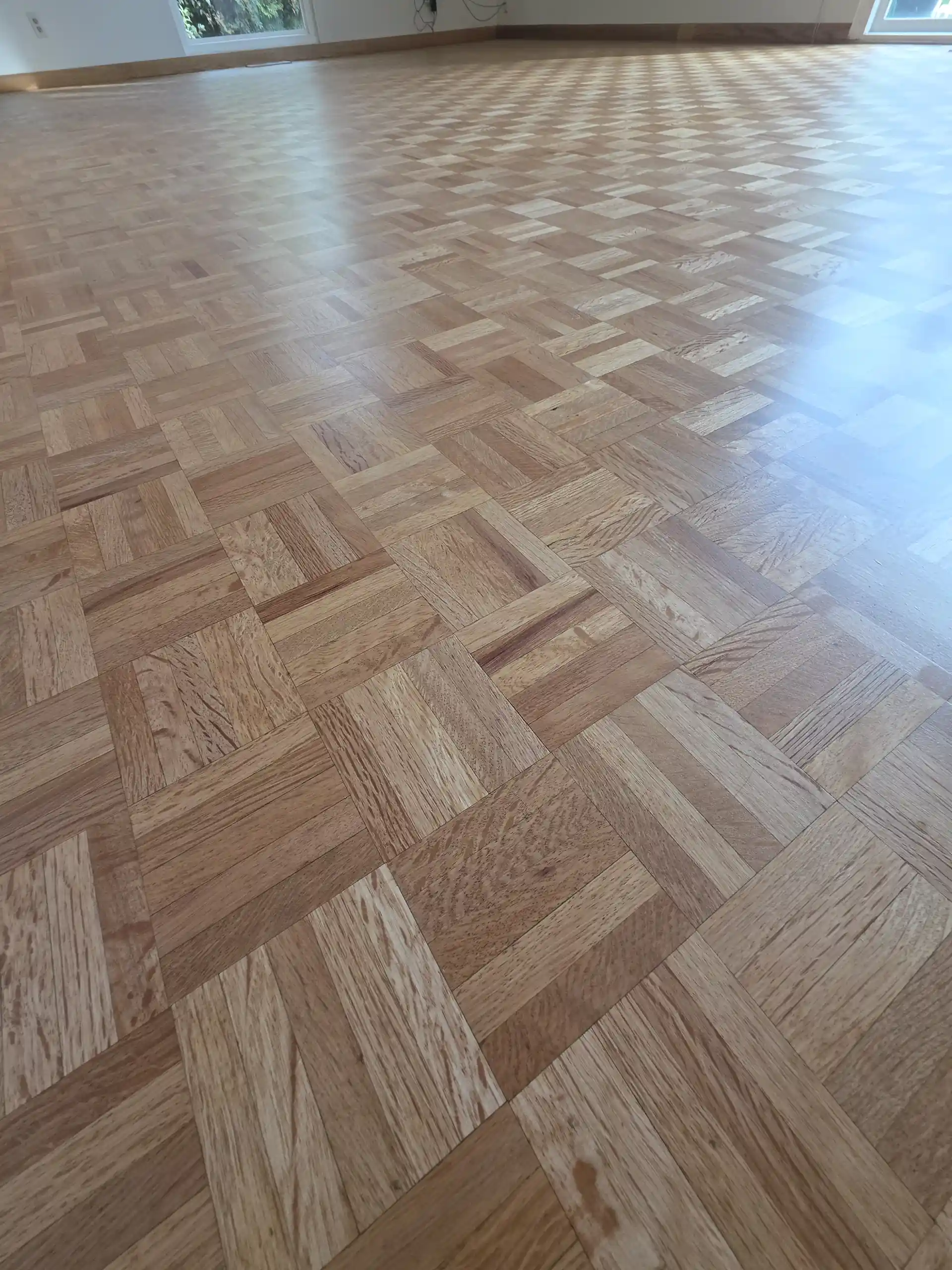
Sanded & refinished Douglas Fir floors from 1958 & gave them new life! Fast, efficient, skilled & professional! I would highly recommend Floor Monkeys! 🐒🐒🐒

Folsom Flooring
Folsom wood floor renewal starts with the boards already in your home.
Half of Folsom's homes were built before 1997. Many still have their original floors and are due for an update.
Source: U.S. Census Bureau, American Community Survey 5-year estimates, 2024. Updated November 2026.
Your Project
A slab beneath the house tells little about the wood above it. Our crew checks the wear layer, old finish, and past repairs before proposing sanding.
Fresh sanding removes a worn surface when enough sound wood remains.
A light surface treatment can suit finish wear on compatible coatings.
Our samples show how the exposed wood takes a new stain.
Covered oak gets a close condition check before any promise of restoration.
Treads and edges need their own wear review and access plan.
Our crew reviews loose boards and damaged spots before sanding begins.
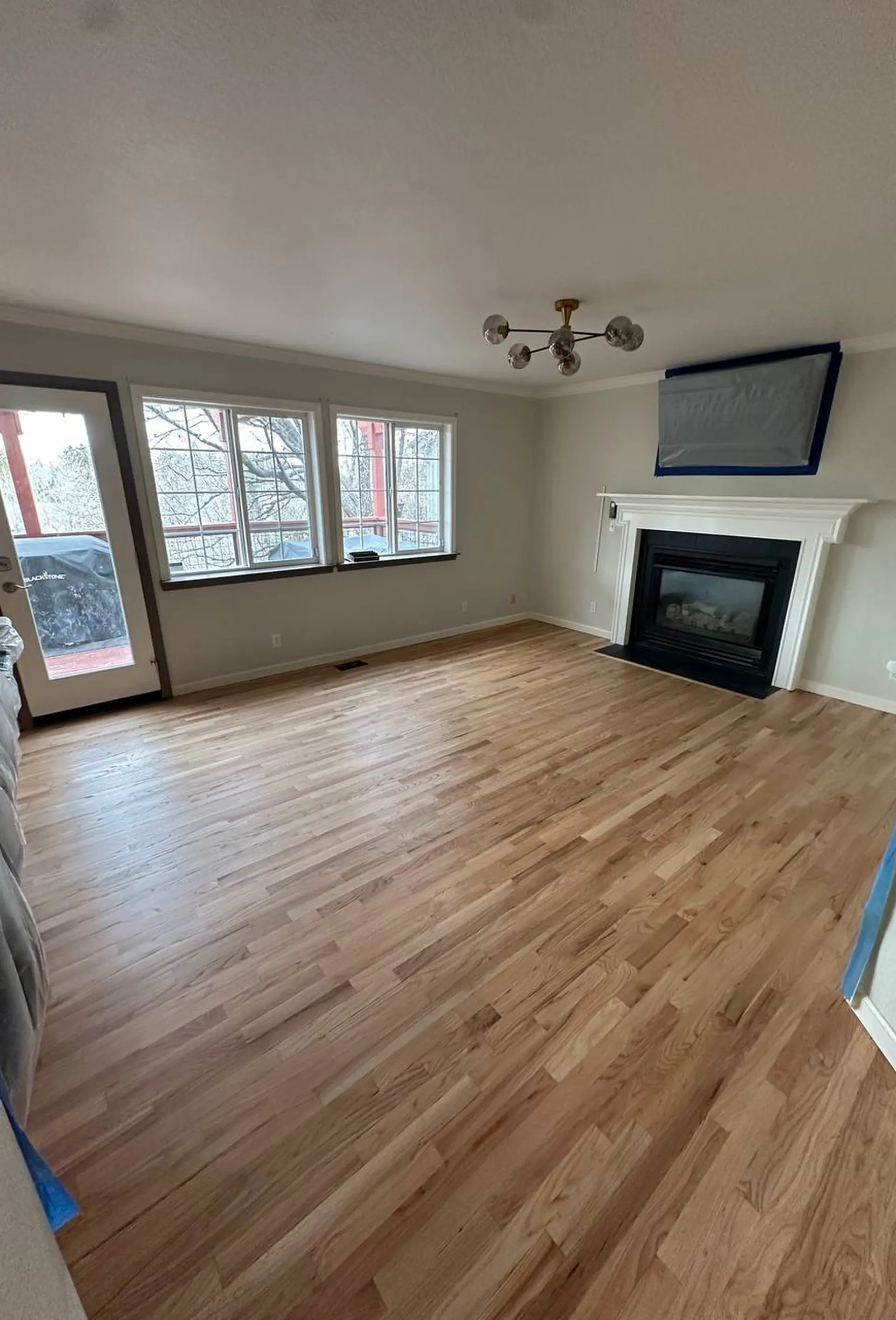
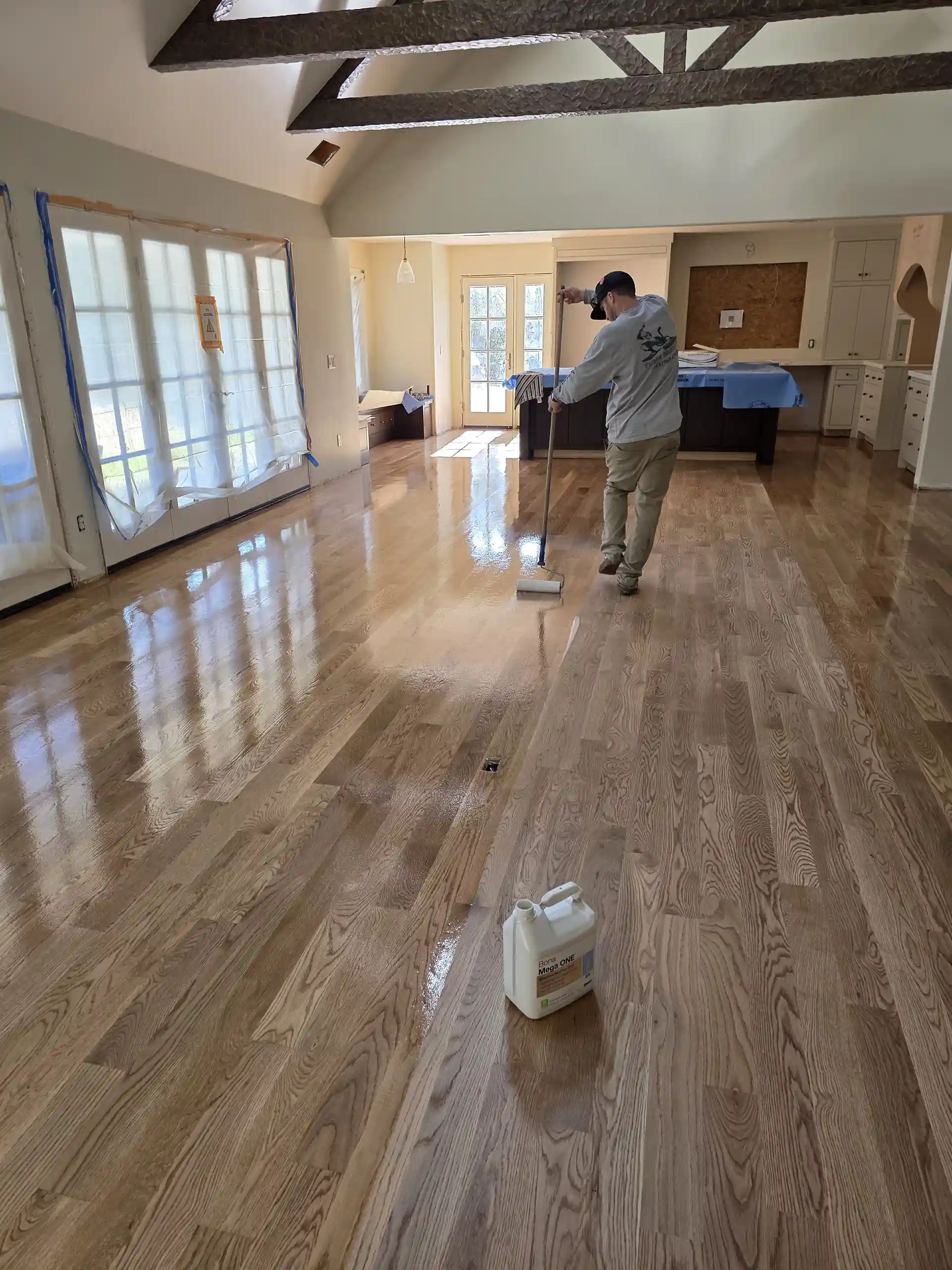
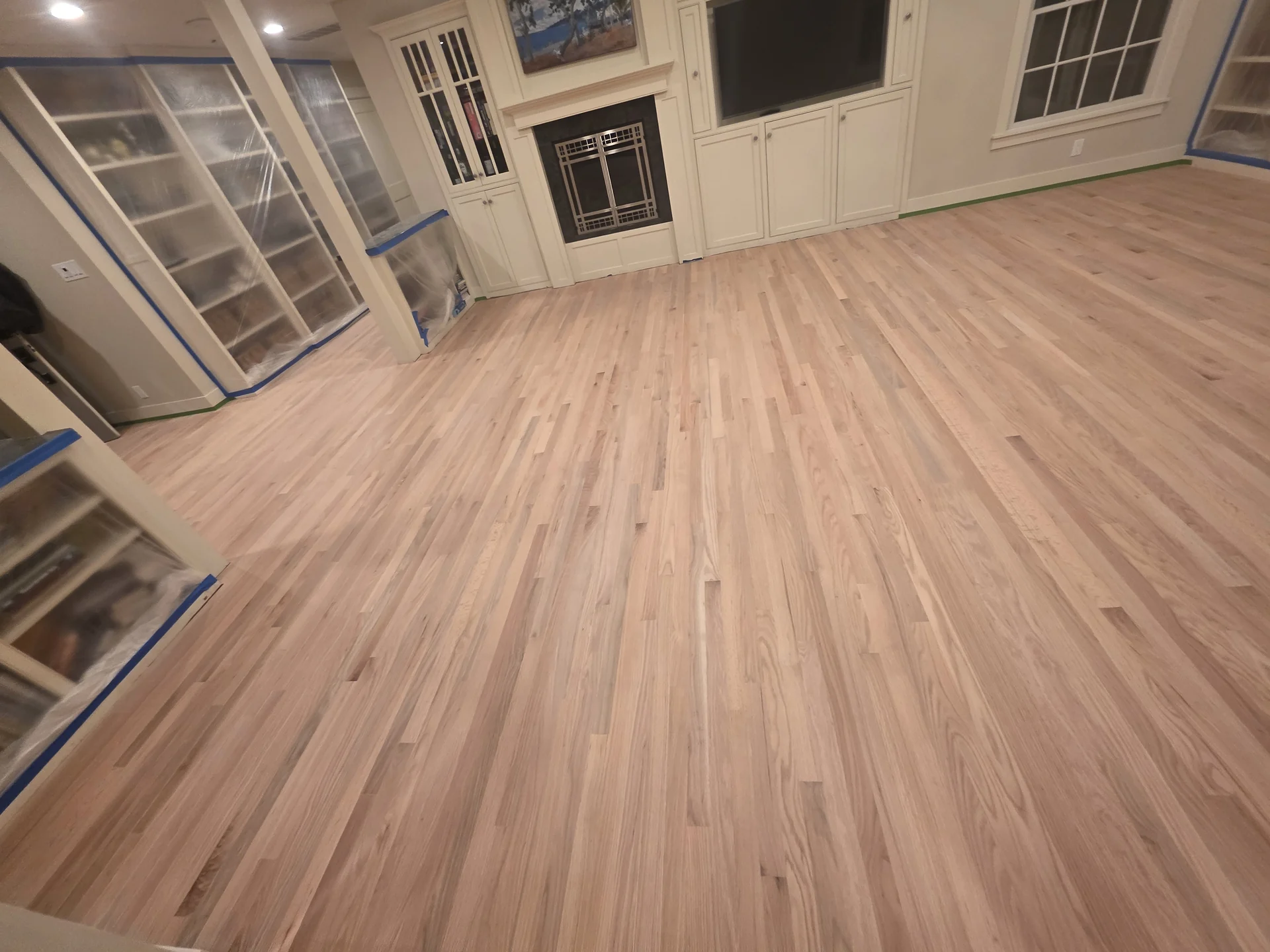
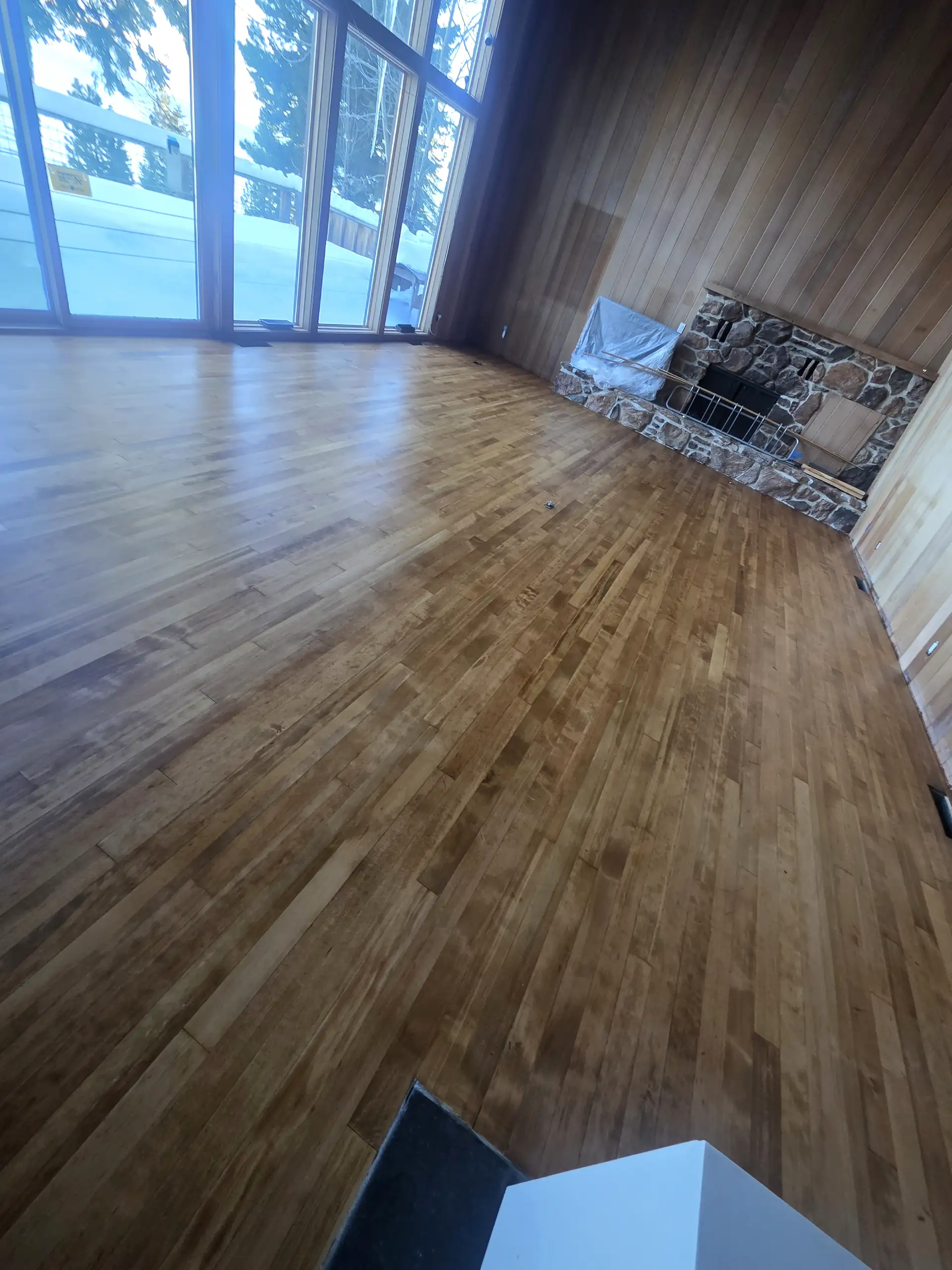
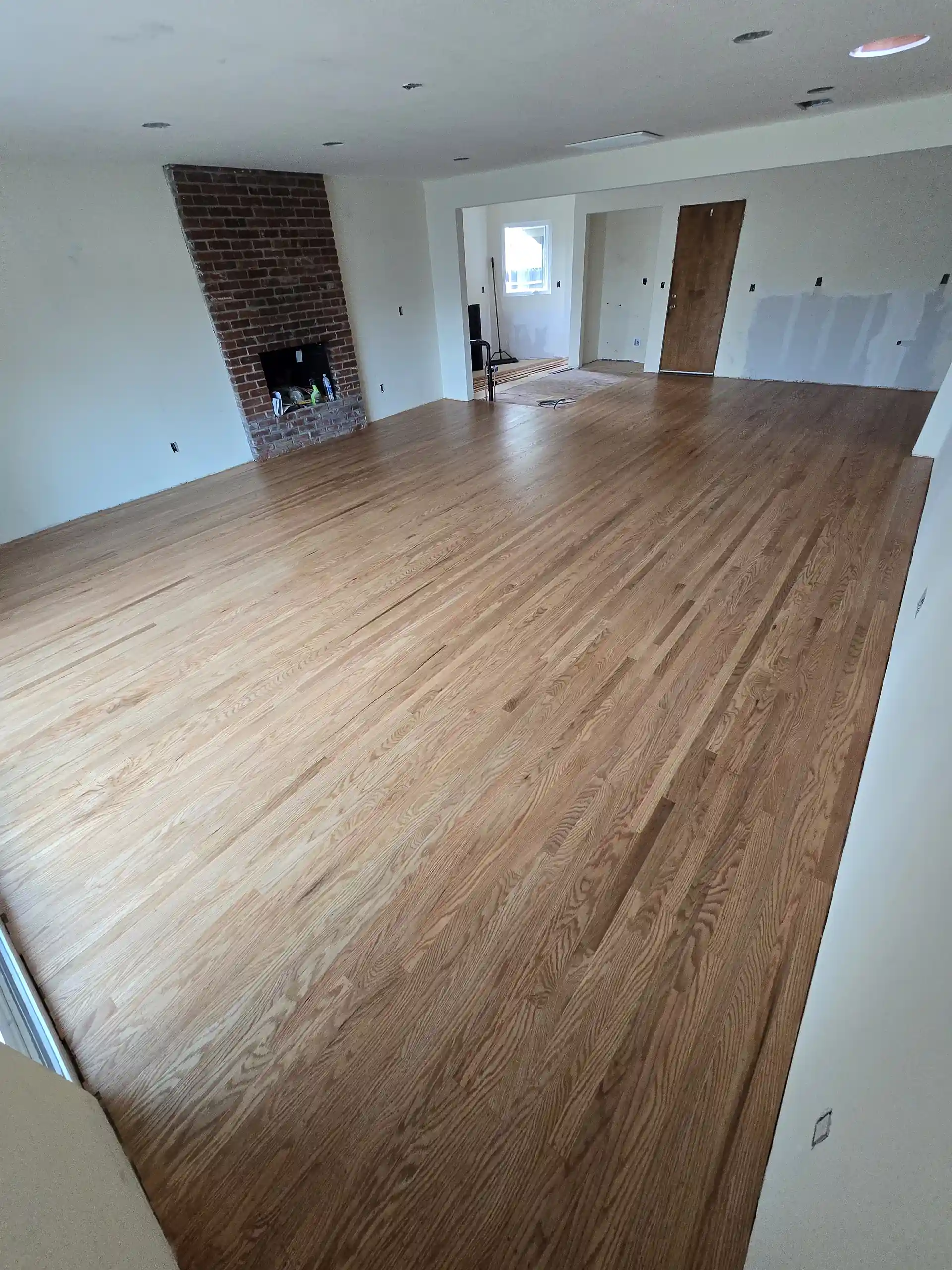
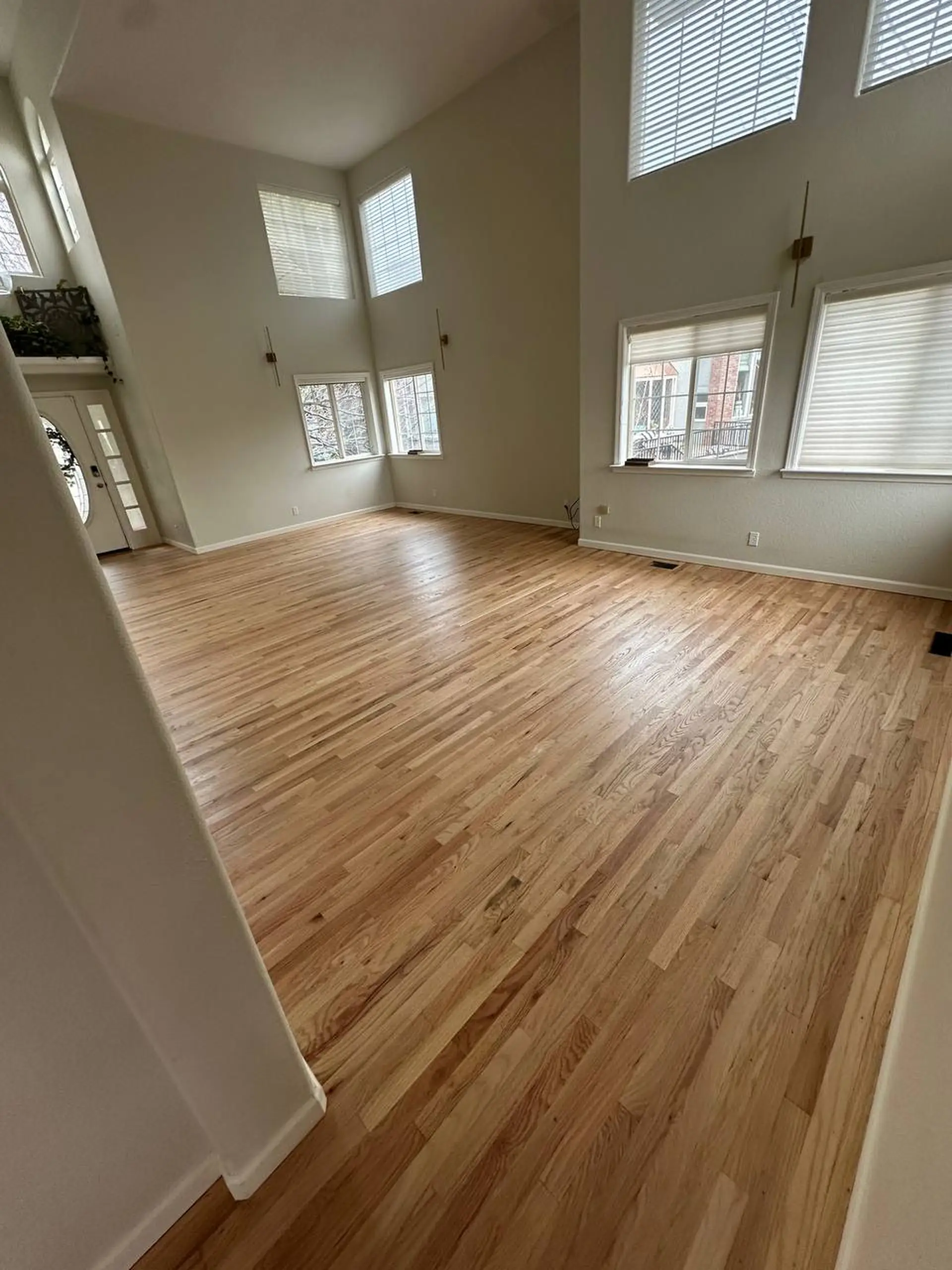
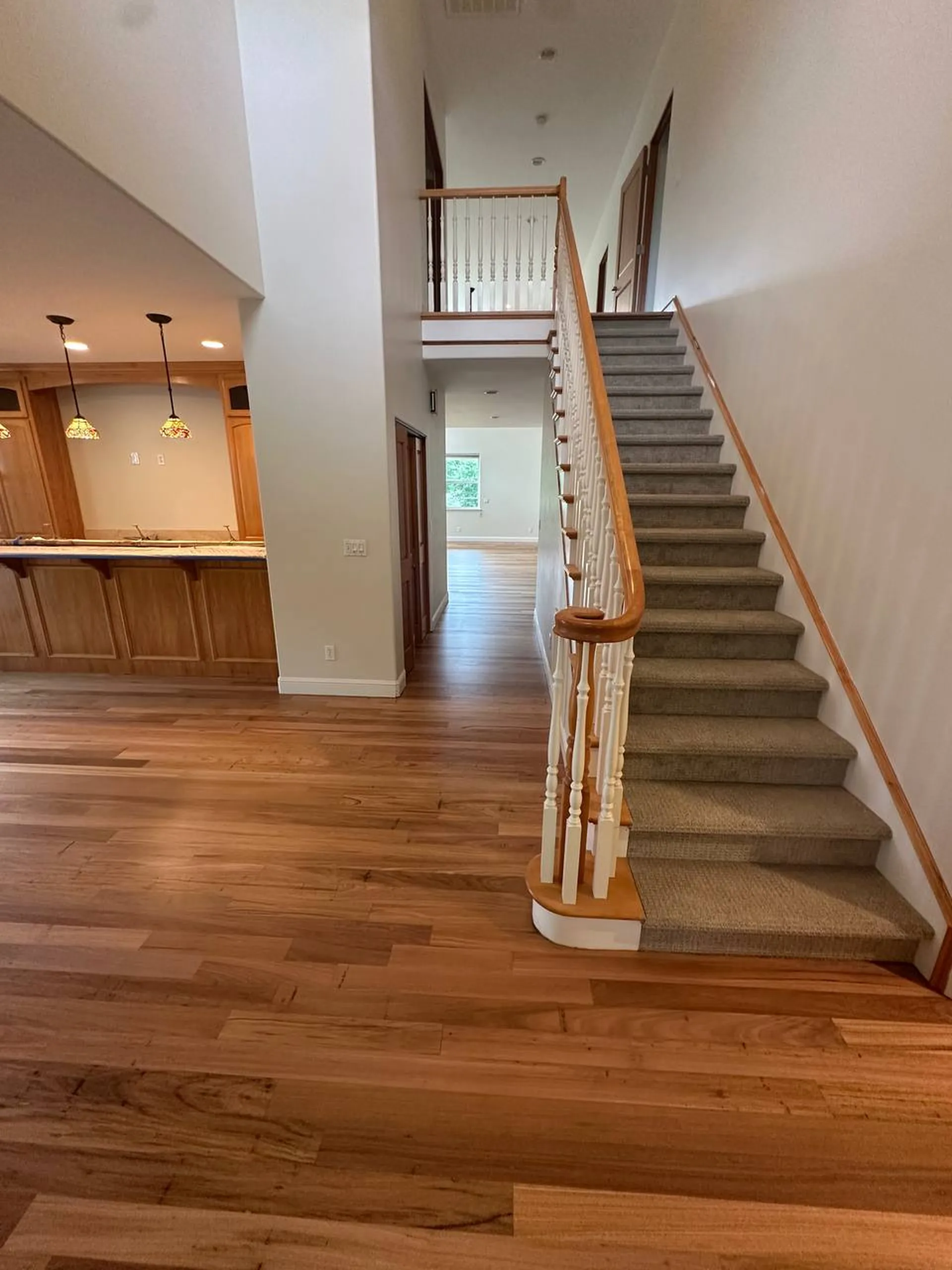
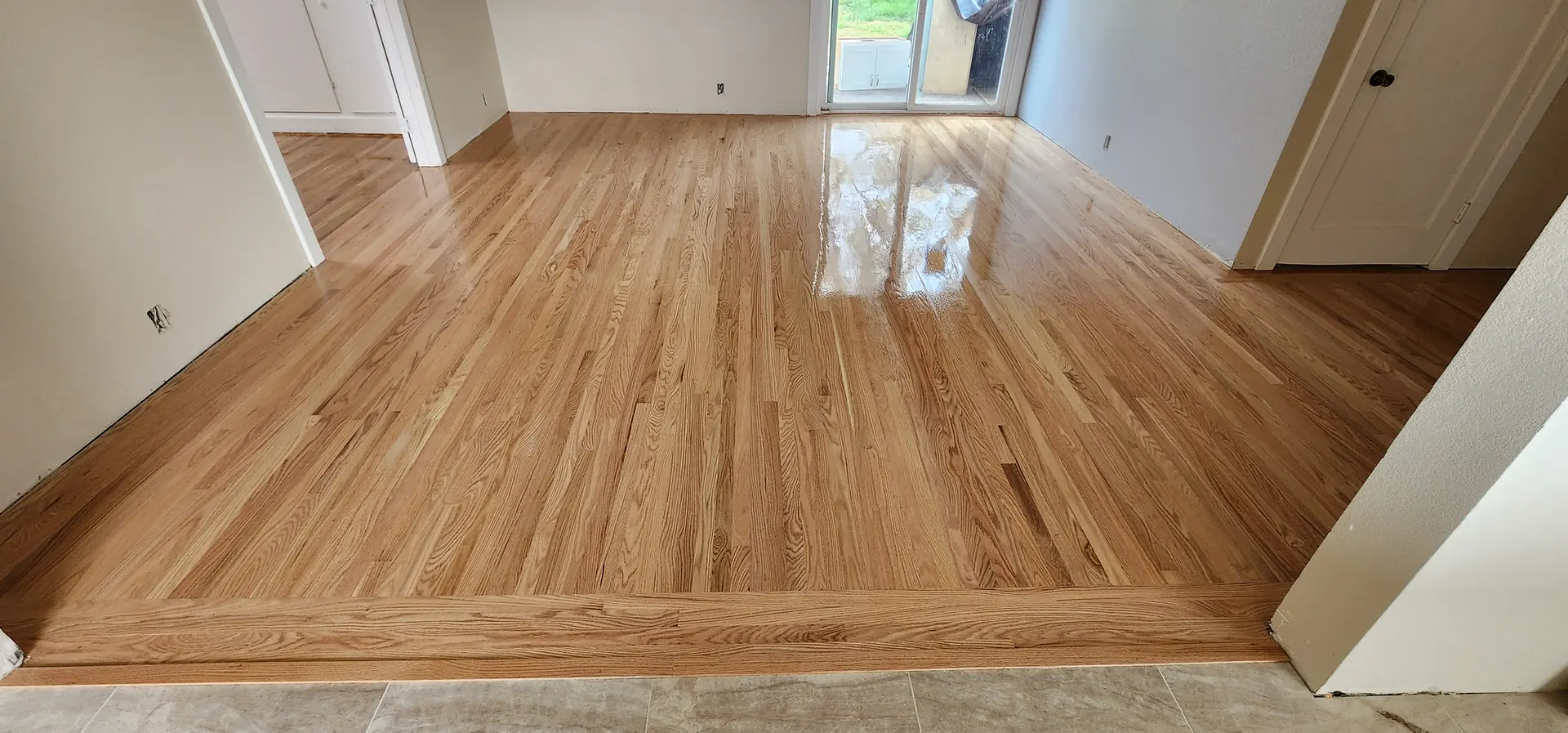
Floor Monkeys Projects
Why Floor Monkeys
| What you get | Floor Monkeys | Typical installers |
|---|---|---|
| License number shown and checkable | ||
| Crew shows up when we say | ||
| Job site cleaned every day | ||
| Moisture test before every wood install | ||
| We move your furniture and move it back | ||
| 1-year workmanship warranty in writing | ||
| Owner personally checks every job |
Your Flooring Project
We examine wear depth and finish condition before proposing a refinishing method.
Your quote describes sanding, repairs, and coating as separate parts of the scope.
The work slot follows finish selection and a practical room clearance plan.
Our crew protects adjacent spaces and sets up safe routes around the work.
Sanding and coating follow the wood condition found across the exposed floor.
We review the renewed surface and explain furniture, rug, and cleaning guidance.
Sanded & refinished Douglas Fir floors from 1958 & gave them new life! Fast, efficient, skilled & professional! I would highly recommend Floor Monkeys! 🐒🐒🐒
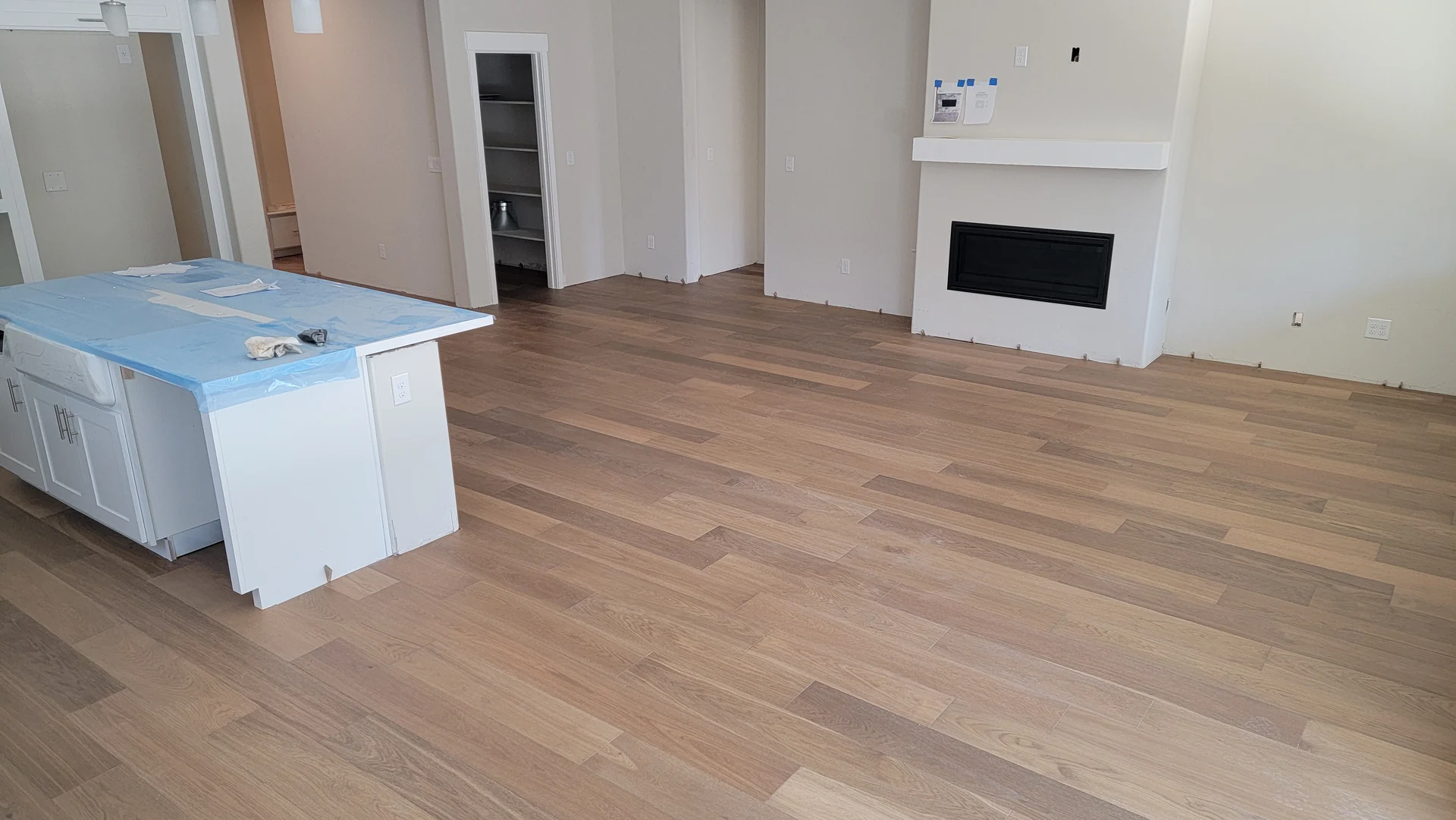
⭐⭐⭐⭐⭐ I cannot recommend Kirill and crew from Floor Monkeys highly enough! From start to finish, they were professional, efficient, and truly cared about doing the job right. When the flooring supplier sold me the wrong product, the crew immediately went to pick up the correct materials without hesitation. They moved all of my furniture, leveled the subfloor, installed beautiful new flooring in both of my bedrooms, and then carefully put everything back exactly where it belonged. Their attention to detail, work ethic, and commitment to customer satisfaction were outstanding. It’s rare to find a company that is this ethical, dependable, and professional. The quality of their work exceeded my expectations, and I couldn’t be happier with the results. If you’re looking for a flooring company you can trust, I wholeheartedly recommend Four Monkeys. They earned every one of these five stars!
Kirill, owner of Floor Monkeys, went well-above anything I expected. We met several times, he tested our hardwood floor, made recommendations on how our once beautiful (and not so old) flooring could be brought back to life. The results were amazing! I was so impressed with the time, care, trust, and level of professionalism I experienced from beginning to end. I would recommend Floor Monkeys to anyone who is in need of the best in the industry...
Ready for floors you'll show off?
Free in-home estimate. Written quote. No pressure.
Our refinishing work in Folsom begins with the wood surface and its condition. Many local houses have slab foundations from more recent decades. Our crew checks whether existing boards can safely take another sanding.
A wood floor may be solid or have a thin wood face. Both can look much alike once furniture fills the living room. A vent edge or exposed end may help reveal the construction. Previous sanding can also reduce the amount of usable wood left. We look for that history before deciding how deeply tools can cut. We aim to keep sound material while renewing the worn face. Some floors need a lighter treatment than a full sanding job.
A wood floor may be solid or have a thin wood face. Both can look much alike once furniture fills the living room. A vent edge or exposed end may help reveal the construction. Previous sanding can also reduce the amount of usable wood left. We look for that history before deciding how deeply tools can cut. We aim to keep sound material while renewing the worn face. Some floors need a lighter treatment than a full sanding job.
Wear patterns offer clues about how the coating has held up. A dull route through a hall may be mostly surface wear. Deep gray marks near a wet area may reach into the wood. Loose edges and movement need attention before the finish can be renewed. Our crew separates those issues during the first review of the rooms. That helps make clear which marks may stay after the work. Our crew checks for missing wood before choosing how to protect the face.
Moisture or a weak bond leads us to check the slab beneath the boards. Sanding addresses the top surface, while those issues sit farther down. A hollow area deserves review before heavy equipment crosses the room. Homeowners benefit from knowing the limits before picking a new color. We explain repair options in plain terms alongside the sanding plan. Our repair plan preserves useful wood and addresses the actual cause of wear. A clear starting point makes each later finish choice more useful.
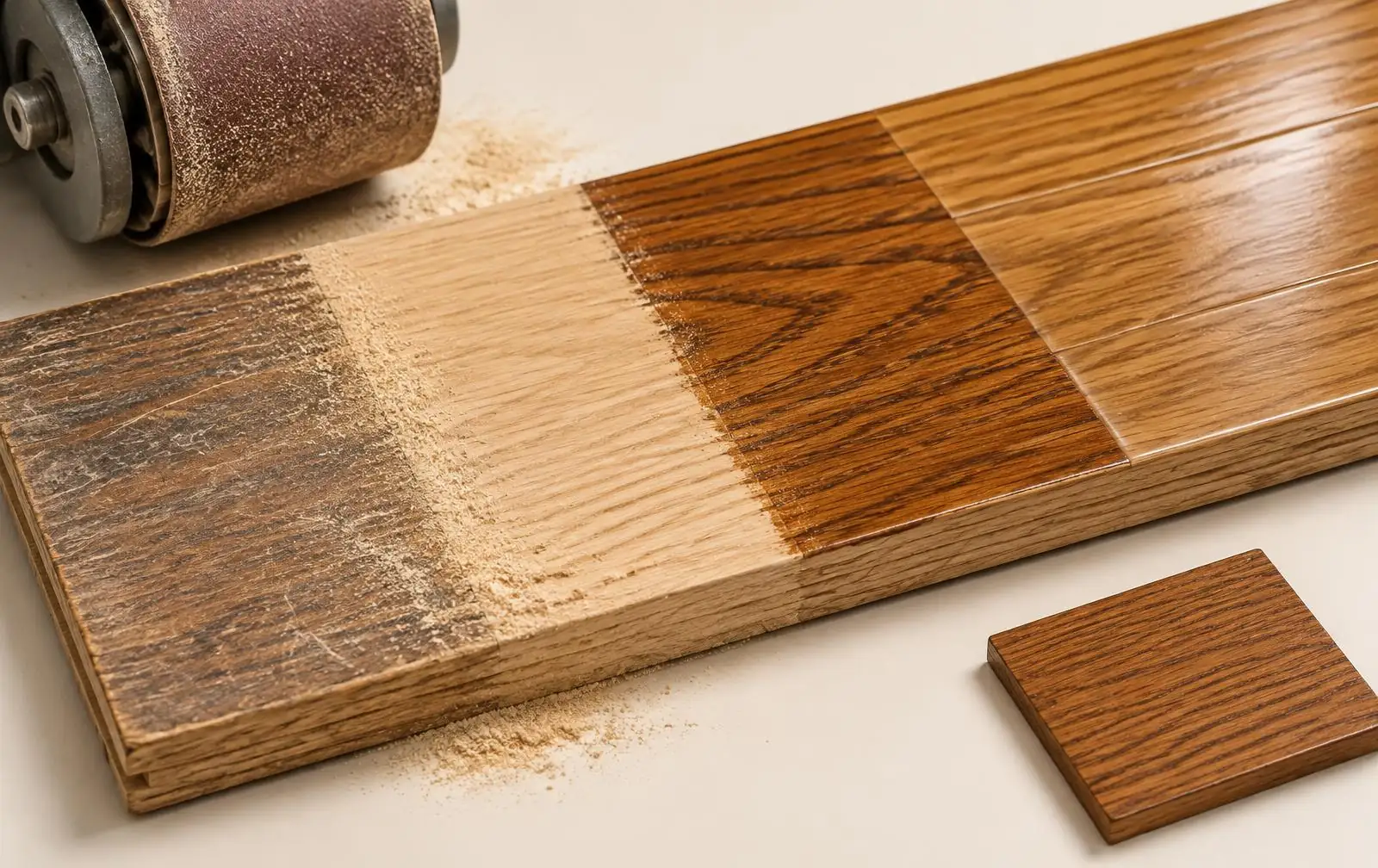
Flat sanding creates the base for an even stain and clear coating. Old ridges, scratches, and edge marks can show through a fresh finish. Our sanding sequence works toward a consistent face across each room.
The first sanding pass lets us remove worn coating and level surface flaws. We adjust the sanding cut to suit the wood’s thickness and present condition. A thin wear layer calls for a different approach from thick solid oak. Deep pet marks may remain below the safe sanding depth available. We judge those limits as the old finish comes off the boards. Removing every dark mark can sometimes cost too much useful wood. A repair may offer a better route for a badly damaged area.
The first sanding pass lets us remove worn coating and level surface flaws. We adjust the sanding cut to suit the wood’s thickness and present condition. A thin wear layer calls for a different approach from thick solid oak. Deep pet marks may remain below the safe sanding depth available. We judge those limits as the old finish comes off the boards. Removing every dark mark can sometimes cost too much useful wood. A repair may offer a better route for a badly damaged area.
Edges need to blend with the field in the center of the room. Different tools reach those spaces, so their scratch patterns can vary. A final blend helps keep a border from appearing around each wall. Corners and tight spots also need close hand work before stain. Our crew checks those details under light that reveals the surface texture. A stain can make an overlooked swirl much easier to see later. Care at this stage helps avoid a patchy look across the floor.
Filling follows the condition of the joints and the type of gap. A moving gap may shed filler when the boards shift with seasons. Loose boards need a sound repair before a smooth surface can hold. Once our sanding checks are complete, the floor is ready for samples. Color is judged on the wood that will actually receive the stain. That is more useful than choosing from a printed card alone. Those hidden limits guide our work toward the finish you will see.
Tap a number to see each part.
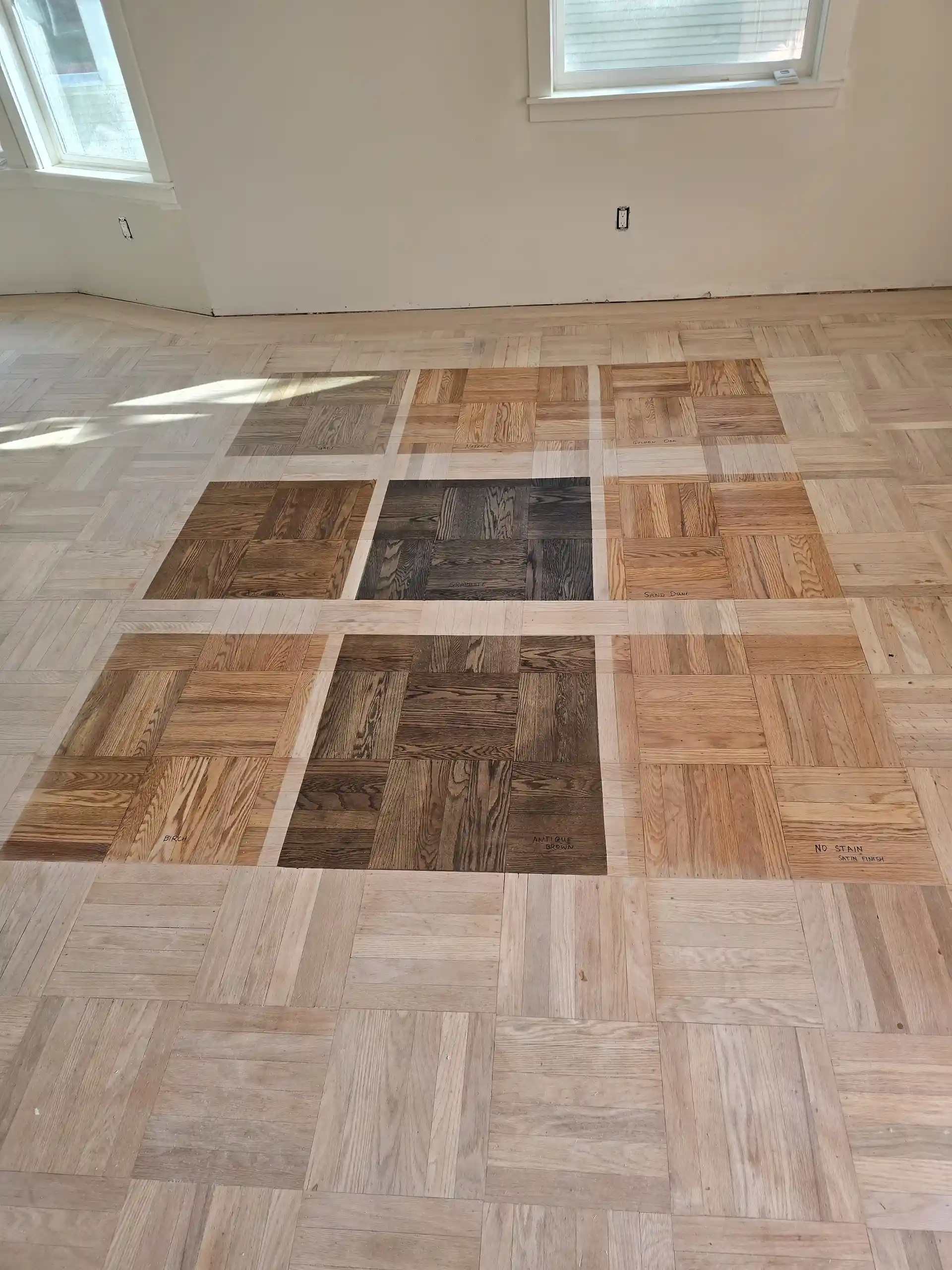
A suitable finish depends on wear, wood type, and the look desired. Stain changes color, while the clear coating provides the wear surface. Our crew helps keep those two decisions separate during sample review.
A clear finish may reveal more warmth than the bare wood suggests. A darker stain can highlight both grain and small sanding marks. Light shades may still show old stains that extend below the surface. The wood itself limits the range of color we can achieve with stain. We make samples where they can be viewed in the home's light. Morning glare and evening lamps can change how a shade reads. A sample on the actual floor gives a more useful comparison.
A clear finish may reveal more warmth than the bare wood suggests. A darker stain can highlight both grain and small sanding marks. Light shades may still show old stains that extend below the surface. The wood itself limits the range of color we can achieve with stain. We make samples where they can be viewed in the home's light. Morning glare and evening lamps can change how a shade reads. A sample on the actual floor gives a more useful comparison.
Low sheen often softens reflections across a broad run of boards. A higher sheen makes reflected light sharper and surface marks more visible. Sheen is a visual choice, while coating strength depends on the product. Cleaning needs and cure guidance also vary with the selected finish system. Our crew explains those tradeoffs before the final coating plan is set. A busy hall may need different care habits from a spare room. The same finish still needs sound preparation beneath both of those spaces.
A screen and recoat can renew a suitable existing finish with less cutting. That route depends on adhesion and the condition of the old coating. Wax, oils, or some cleaning residues can interfere with a new coat. Exposed wood and deep scratches usually call for a closer repair discussion. We test the proposed path where the floor condition warrants that check. The choice should follow what the surface can support over time. Full sanding remains a separate service with a different scope and result.
For a wood face with enough depth, our pick is sanding followed by a low sheen clear coat. That route renews the worn surface while keeping the grain easy to see. A stain change calls for a trial across the boards that vary most in tone.
Our refinishing work in Folsom begins with the wood surface and its condition.
Refinishing cost follows the condition of the wood and the work required. Repairs, coating removal, and color changes can add separate stages. Our estimate describes those tasks so the scope is clear before sanding starts.
A room with broad open space differs from a tight stair landing. Corners, closets, and cabinet edges can need more detailed hand work. Old finish hardness may also affect the time spent removing it. Thick buildup can take more effort than a lightly worn clear coat. Our crew looks at both the room shape and the existing surface. A floor area alone tells only part of the labor involved. Access to power and a safe tool route also shapes setup.
A room with broad open space differs from a tight stair landing. Corners, closets, and cabinet edges can need more detailed hand work. Old finish hardness may also affect the time spent removing it. Thick buildup can take more effort than a lightly worn clear coat. Our crew looks at both the room shape and the existing surface. A floor area alone tells only part of the labor involved. Access to power and a safe tool route also shapes setup.
Board repairs add a different set of choices to a refinishing job. Matching width, thickness, and species can take care before sanding begins. A fresh board may take stain differently from the older wood beside it. That contrast deserves a sample and a discussion about the final look. We identify likely repair areas while reviewing the floor with the homeowner. Moisture stains may call for replacement where surface work reaches its limit. A clear quote separates that repair scope from general finish renewal.
Color change can involve extra sample work and close sanding checks. A stair flight also has edges and turns beyond its tread faces. Moving furniture and handling rugs may need a separate plan for the household. Those tasks affect access even when they sit outside the sanding scope. Our written plan makes the agreed boundaries easy to understand before work. The useful measure is the condition being treated and the finish system. A simple room count would miss many details that affect the work.
For this Folsom floor, our written quote separates board repairs from sanding and coat work, with the depth of the wood face as our guide. Our daily cleanup follows the paths between slab rooms and staging space, keeping grit away from the next stage of work, with the depth of the wood face as our guide.
Refinishing moves from room clearance through repairs, sanding, and fresh coating. Drying time separates coats, and cure continues after the floor feels dry. Our crew explains each stage using the selected finish maker's guidance.
Furniture needs a safe place away from the areas being treated. Open doorways can connect work rooms to spaces still in use. Protection helps limit dust spread, though sanding still needs a household plan. Children and pets need routes that stay clear of tools and coatings. We discuss that setup before the first sanding machine enters the house. A home with one main hall may need a different access plan. Room order should support both good work and practical daily needs.
Furniture needs a safe place away from the areas being treated. Open doorways can connect work rooms to spaces still in use. Protection helps limit dust spread, though sanding still needs a household plan. Children and pets need routes that stay clear of tools and coatings. We discuss that setup before the first sanding machine enters the house. A home with one main hall may need a different access plan. Room order should support both good work and practical daily needs.
Repairs come before the sanding sequence so new boards can blend in. Once the surface is bare, sample colors can be judged more clearly. Approval at that point sets the direction for the stain work. Coating follows only when the prepared surface is ready for the system. Our crew checks conditions between stages to set a sound return plan. Air movement and indoor conditions can affect how coatings dry and cure. More repair work can shift the schedule before the final coat begins.
A dry surface can still be soft enough for furniture to mark. Rugs may hold moisture near a finish that is still gaining strength. The finish guidance sets when those items can return to the room. Soft feet under furniture help once the floor is ready for use. At handoff, we explain cleaning and the first weeks of daily care. The homeowner then has a clear path from fresh coating to regular use. That final guidance matters as much as the shine at the walkthrough.
The newer slab homes in Folsom Ranch and around Lake Natoma need a wood plan tied to the base. With our survey, existing board type and bond help set the repair method.
In Folsom's newer slab homes, the wood face and bond need separate checks. A loose board needs repair before sanding can produce an even surface. We check an exposed edge for usable wood depth rather than judging by house age. The neighborhood name alone establishes little about the age of that wood. Our crew treats an exposed patch as evidence, then checks the remaining rooms. Nail holes, old adhesive, and stains can all affect the restoration scope. Any promise about color or smoothness should follow that full review. In Broadstone or Empire Ranch, existing engineered wood needs the same thickness check. A floor installed during a remodel may differ from the original finish. Repairs at a kitchen edge can also reveal several layers of work. We compare those areas before proposing a single treatment across the rooms. If one section has limited wood left, that affects the whole plan. Matching the appearance may involve a mix of repair and finish work. The visit helps define what can reasonably be retained in place. Folsom Ranch and Lake Natoma area projects start with that direct inspection too. Homeowners may want less glare, a new shade, or relief from worn paths. Those goals lead to different choices once the coating is examined. Our crew explains which goals fit a fresh coat and which need bare wood. A careful scope can preserve the floor's useful life through another cycle. Renewed wood should feel like a considered part of the home. The starting point is the floor itself, viewed closely in its rooms.
In Folsom's newer slab homes, the wood face and bond need separate checks. A loose board needs repair before sanding can produce an even surface. We check an exposed edge for usable wood depth rather than judging by house age. The neighborhood name alone establishes little about the age of that wood. Our crew treats an exposed patch as evidence, then checks the remaining rooms. Nail holes, old adhesive, and stains can all affect the restoration scope. Any promise about color or smoothness should follow that full review. In Broadstone or Empire Ranch, existing engineered wood needs the same thickness check. A floor installed during a remodel may differ from the original finish. Repairs at a kitchen edge can also reveal several layers of work. We compare those areas before proposing a single treatment across the rooms. If one section has limited wood left, that affects the whole plan. Matching the appearance may involve a mix of repair and finish work. The visit helps define what can reasonably be retained in place. Folsom Ranch and Lake Natoma area projects start with that direct inspection too. Homeowners may want less glare, a new shade, or relief from worn paths. Those goals lead to different choices once the coating is examined. Our crew explains which goals fit a fresh coat and which need bare wood. A careful scope can preserve the floor's useful life through another cycle. Renewed wood should feel like a considered part of the home. The starting point is the floor itself, viewed closely in its rooms.
Folsom Project Questions
The usable wear layer and past sanding decide what is safe. Our review may point toward a fresh coat or repair where full sanding is unsuitable.
Some stains reach beneath the safe sanding depth. A damaged board may need replacement, and color samples help set realistic expectations.
Oak found under carpet needs checks for thickness, stains, and loose boards. We can define the restoration scope once the surface is exposed.
Sanding and wet coatings can block shared paths between rooms. The room sequence and finish guidance shape the access plan discussed before work.
Related Flooring