“I would highly recommend Floor Monkeys!”
Sanded & refinished Douglas Fir floors from 1958 & gave them new life! Fast, efficient, skilled & professional! I would highly recommend Floor Monkeys! 🐒🐒🐒

Land Park Flooring
Oak from the 1920s through the 1940s may still be waiting beneath carpet.
Half of Land Park's homes were built before 1942. Many still have original oak floors, often hidden under carpet.
83% of homes here were built before 1980.
Source: U.S. Census Bureau, American Community Survey 5-year estimates, 2024. Figures for ZIP 95818. Updated November 2026.
Your Project
Land Park refinishing begins with the original floor, including oak hidden by later carpet. We assess what can be saved before suggesting changes to color or sheen. Most Land Park homes date from around 1942 or earlier.
Worn oak gets a thickness review before full sanding and fresh coats. The work plan accounts for old repairs as well as daily wear.
A light scuff and fresh coat may suit finish with shallow wear. Our adhesion check helps decide whether the existing coat can stay.
New stain can change the mood of connected rooms with sound oak. Trial patches show how the old grain responds to each shade.
Hidden boards need more than a quick glance after carpet comes up. We map staple damage, dark patches, and any missing wood first.
Stair refinishing includes tread wear, exposed edges, and a plan for access. Each step needs room to dry before normal use resumes.
Early board repairs keep weak strips from spoiling a freshly coated floor. Matching the width and grain helps repaired areas fit the surrounding wood.
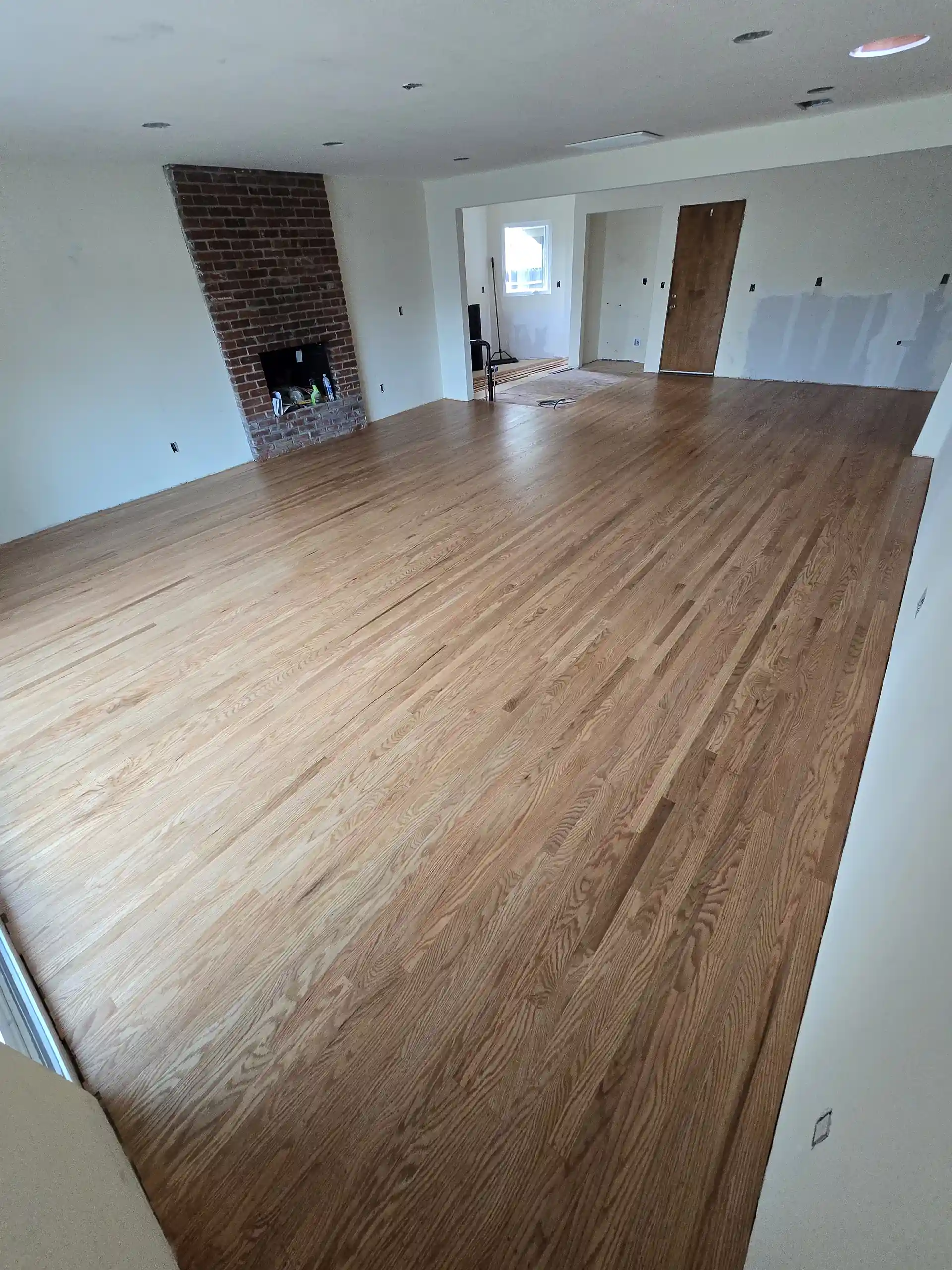
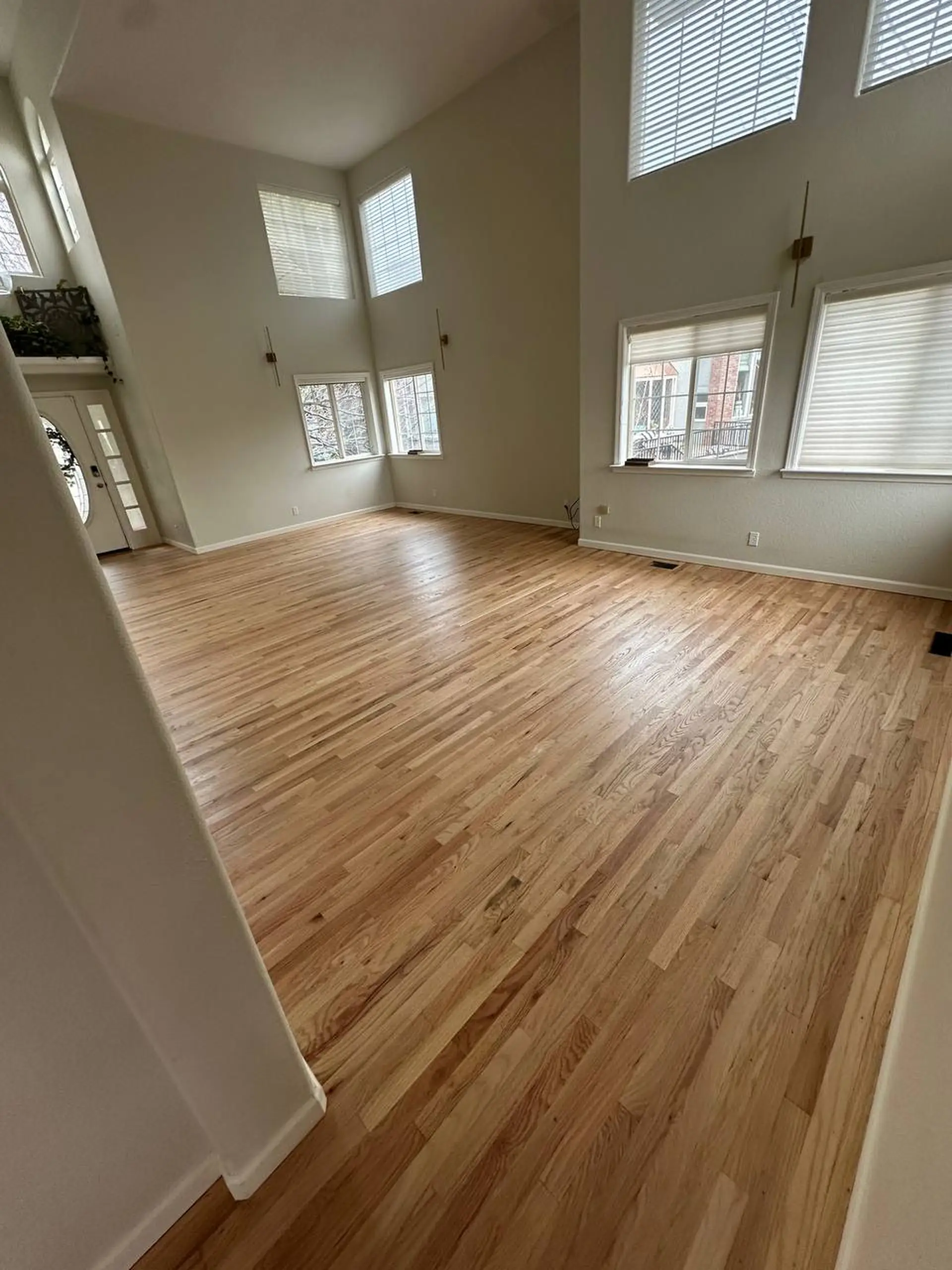
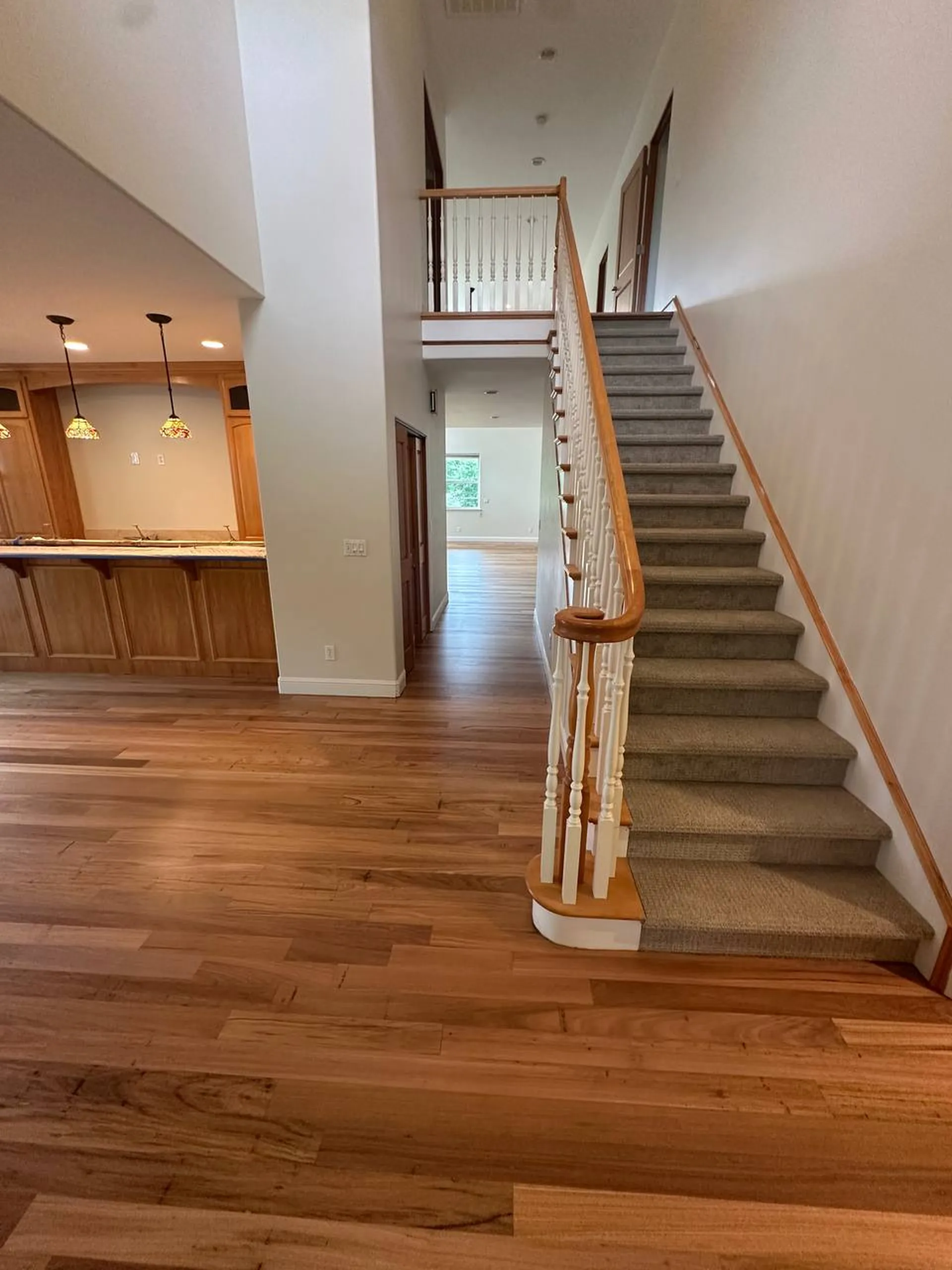
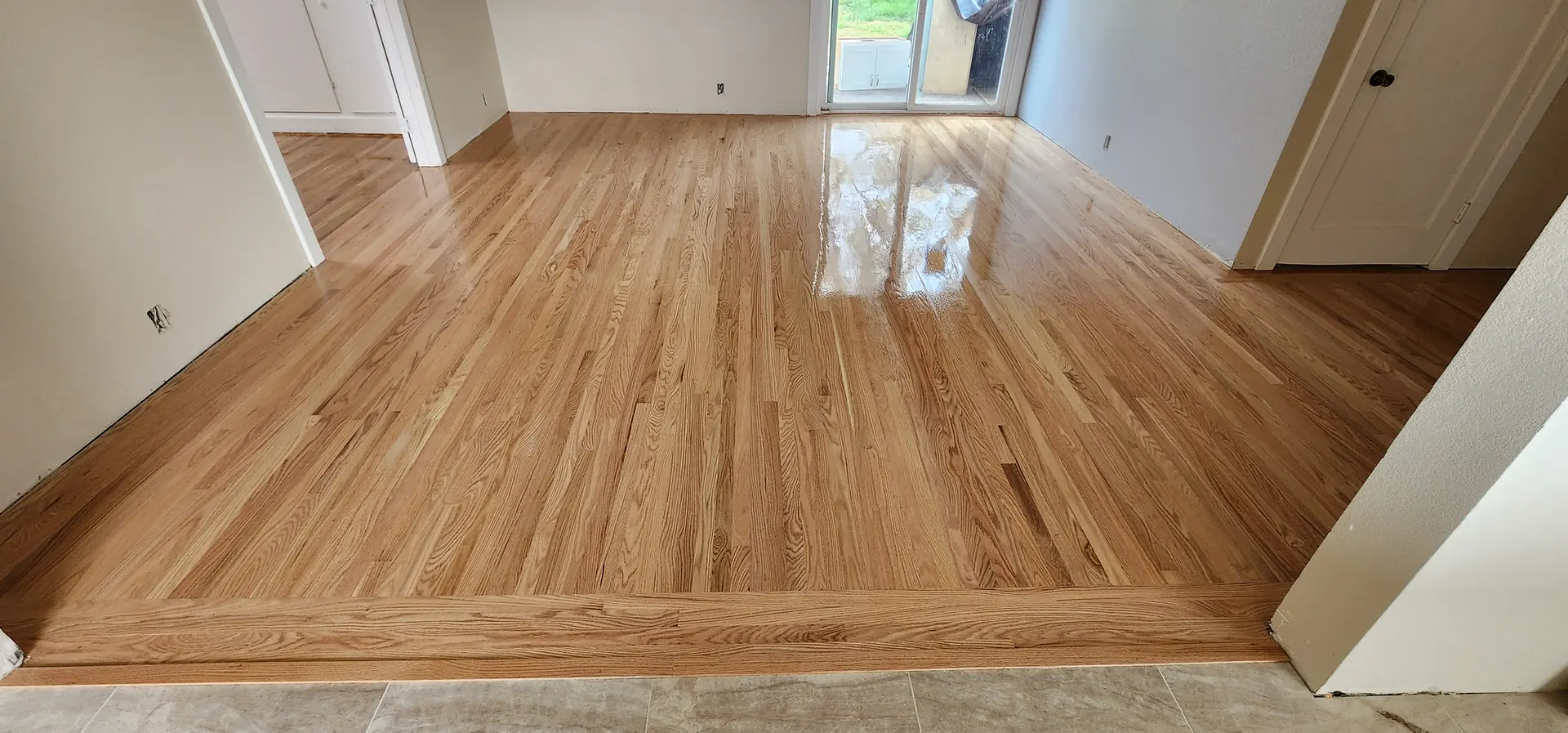
Floor Monkeys Projects
Why Floor Monkeys
| What you get | Floor Monkeys | Typical installers |
|---|---|---|
| License number shown and checkable | ||
| Crew shows up when we say | ||
| Job site cleaned every day | ||
| Moisture test before every wood install | ||
| We move your furniture and move it back | ||
| 1-year workmanship warranty in writing | ||
| Owner personally checks every job |
Your Flooring Project
Our first visit checks original strips, covered areas, and the access between rooms.
The written scope identifies repairs and explains which covered areas still need review.
We settle the sample plan and arrange work around household access needs.
Furniture routes and protected surfaces are set before old carpet and finish come away.
Repairs lead into staged sanding, tested color, and the selected finish coats.
Our last review covers visible repairs, sheen, and care while the finish gains strength.
Sanded & refinished Douglas Fir floors from 1958 & gave them new life! Fast, efficient, skilled & professional! I would highly recommend Floor Monkeys! 🐒🐒🐒
⭐⭐⭐⭐⭐ I cannot recommend Kirill and crew from Floor Monkeys highly enough! From start to finish, they were professional, efficient, and truly cared about doing the job right. When the flooring supplier sold me the wrong product, the crew immediately went to pick up the correct materials without hesitation. They moved all of my furniture, leveled the subfloor, installed beautiful new flooring in both of my bedrooms, and then carefully put everything back exactly where it belonged. Their attention to detail, work ethic, and commitment to customer satisfaction were outstanding. It’s rare to find a company that is this ethical, dependable, and professional. The quality of their work exceeded my expectations, and I couldn’t be happier with the results. If you’re looking for a flooring company you can trust, I wholeheartedly recommend Four Monkeys. They earned every one of these five stars!
Kirill, owner of Floor Monkeys, went well-above anything I expected. We met several times, he tested our hardwood floor, made recommendations on how our once beautiful (and not so old) flooring could be brought back to life. The results were amazing! I was so impressed with the time, care, trust, and level of professionalism I experienced from beginning to end. I would recommend Floor Monkeys to anyone who is in need of the best in the industry...
Ready for floors you'll show off?
Free in-home estimate. Written quote. No pressure.
Land Park hardwood refinishing should preserve sound old oak while addressing worn finish. Floors hidden beneath carpet deserve a careful reveal, since their surface can hold clues that change the whole repair plan.
Homes from the 1920s through the 1950s form part of the local picture. Original hardwood may still run through rooms that now have different uses. Some owners want the natural grain back after years of covered floors. Our first review follows the boards through open rooms, closets, and thresholds. A small exposed corner helps start the discussion but leaves other areas uncertain. Full access reveals the wear pattern and the true extent of repairs.
Homes from the 1920s through the 1950s form part of the local picture. Original hardwood may still run through rooms that now have different uses. Some owners want the natural grain back after years of covered floors. Our first review follows the boards through open rooms, closets, and thresholds. A small exposed corner helps start the discussion but leaves other areas uncertain. Full access reveals the wear pattern and the true extent of repairs.
Older oak can carry a useful history of nail holes and patched strips. Sound marks may become part of the look the owner wants to keep. Soft boards and loose ends raise a different issue than simple color variation. Those distinctions guide us as we separate cosmetic work from repairs that add support. A new finish sits on the wood that remains after careful sanding. Enough thickness must remain above the joints to keep that wood sound.
The right result also depends on how much character feels comfortable at home. Some owners prefer a pale surface that shows each change in grain. Others want a deeper tone that brings connected rooms closer in color. With our sample plan, those choices rest on the actual oak underfoot. Existing doors and trim can help frame the decision in each room. A good refinishing scope balances that visual goal with the floor's physical limits.
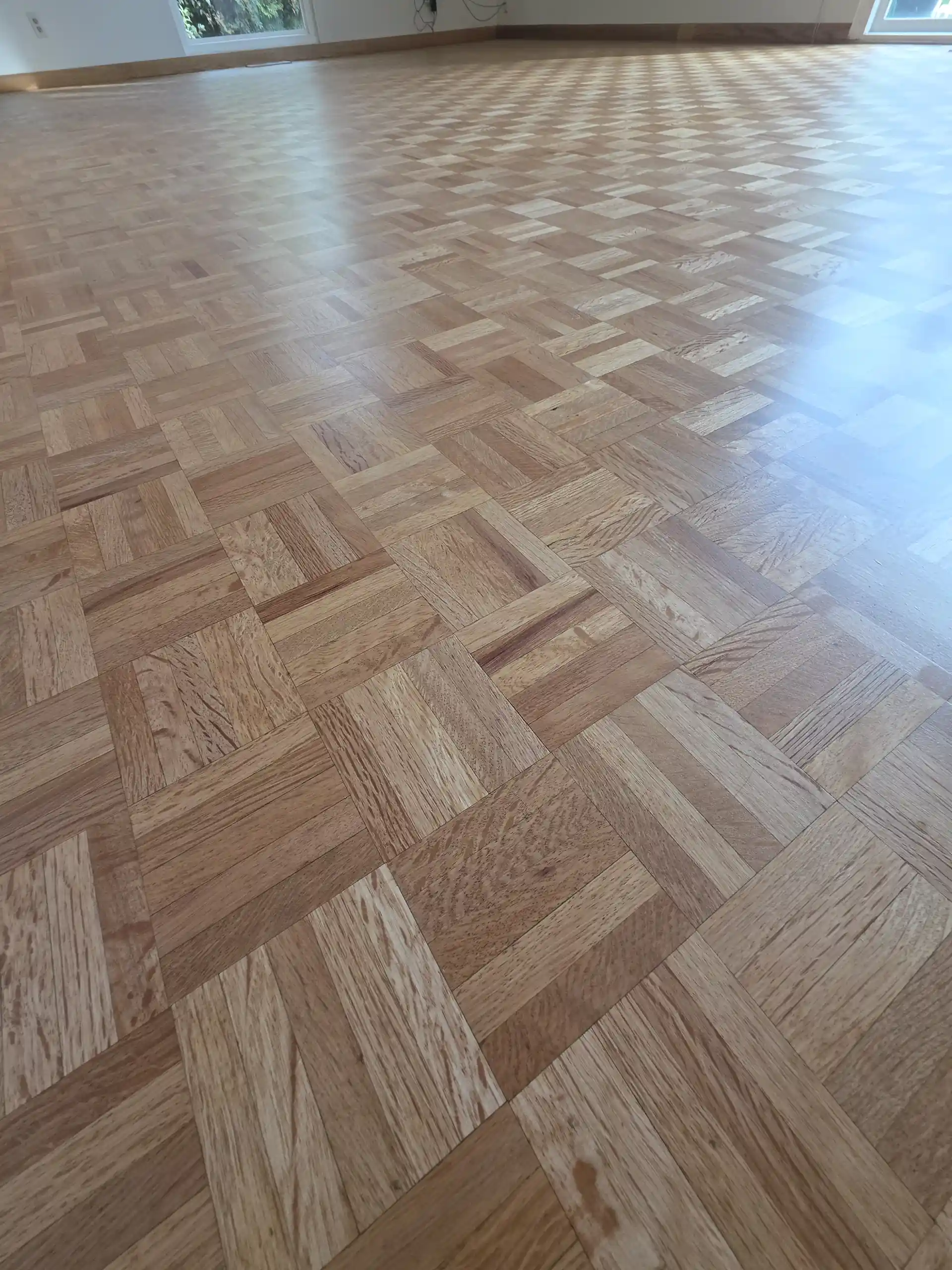
Flat, even sanding gives old Land Park oak a sound base for stain. Our work moves from repair checks to steady sanding passes, with close attention where room edges meet the main floor.
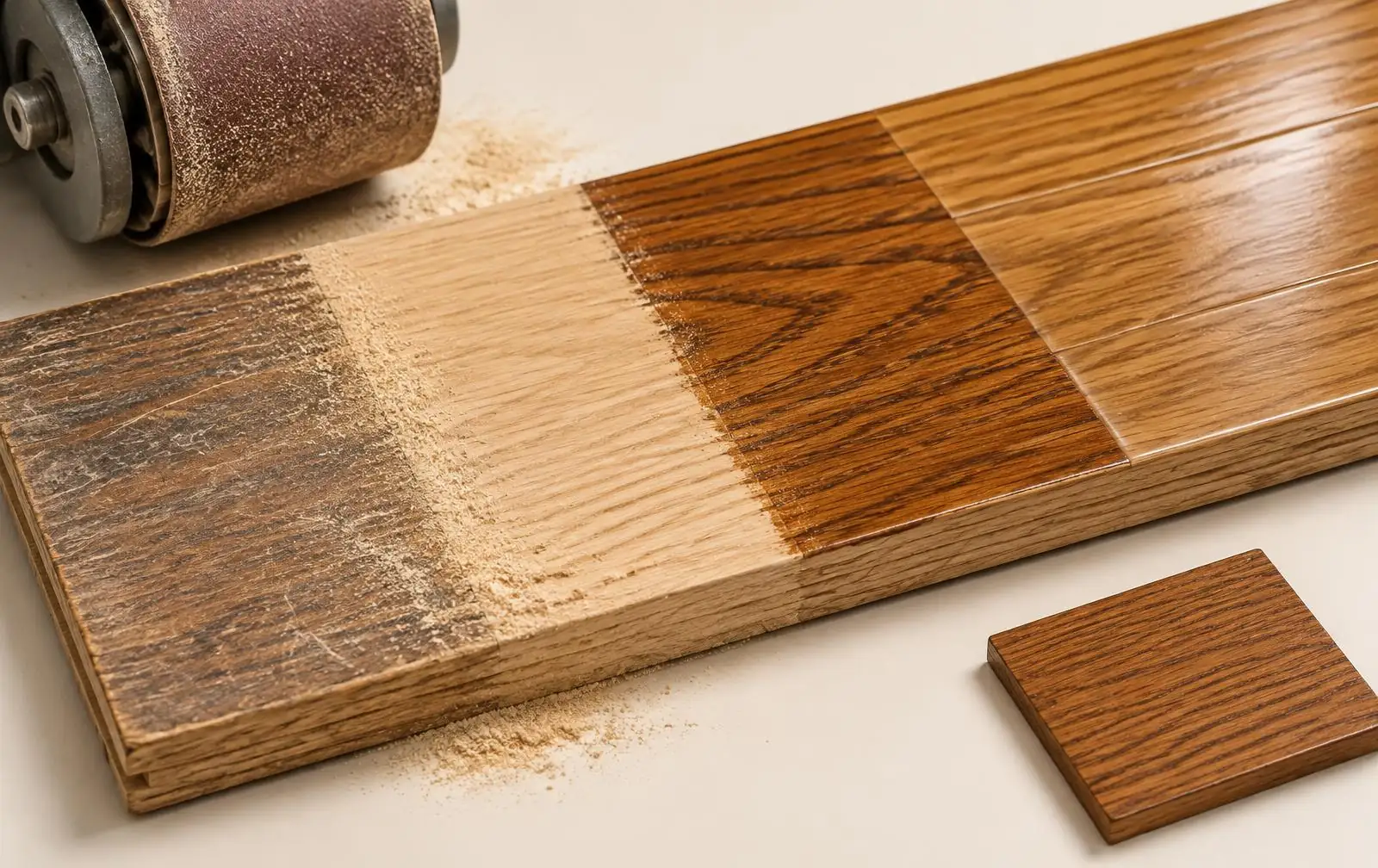
Old finish can collect in corners that saw less foot traffic over time. A worn path may reach bare wood while the perimeter still holds layers. Sanding needs to bring those areas toward a common surface before color starts. We adjust the approach to the finish and the wood found underneath. Coarse scratches need removal through later passes, not a heavy coat to hide them. Clear side lighting helps reveal marks that overhead light may miss at first.
Old finish can collect in corners that saw less foot traffic over time. A worn path may reach bare wood while the perimeter still holds layers. Sanding needs to bring those areas toward a common surface before color starts. We adjust the approach to the finish and the wood found underneath. Coarse scratches need removal through later passes, not a heavy coat to hide them. Clear side lighting helps reveal marks that overhead light may miss at first.
Board height also affects how much wood a safe sanding pass removes. A high edge can tempt an aggressive cut across the neighboring strips. The cause matters because some shape changes come from moisture below the surface. Our crew checks such areas before treating every rise as a sanding problem. A stable floor can still have gentle dips that remain after careful work. Preserving board strength takes priority when a hollow would require too much cutting.
Edges need the same care as the center of a large room. Different tools can leave scratch patterns that catch stain in different ways. A final review helps us find uneven areas before color makes them clearer. We also check repair seams for fit, sanding marks, and stray fill. Dust removal follows through corners where loose grains could affect the first coat. That hidden work shapes the calm, even surface people notice once furniture returns.
Tap a number to see each part.
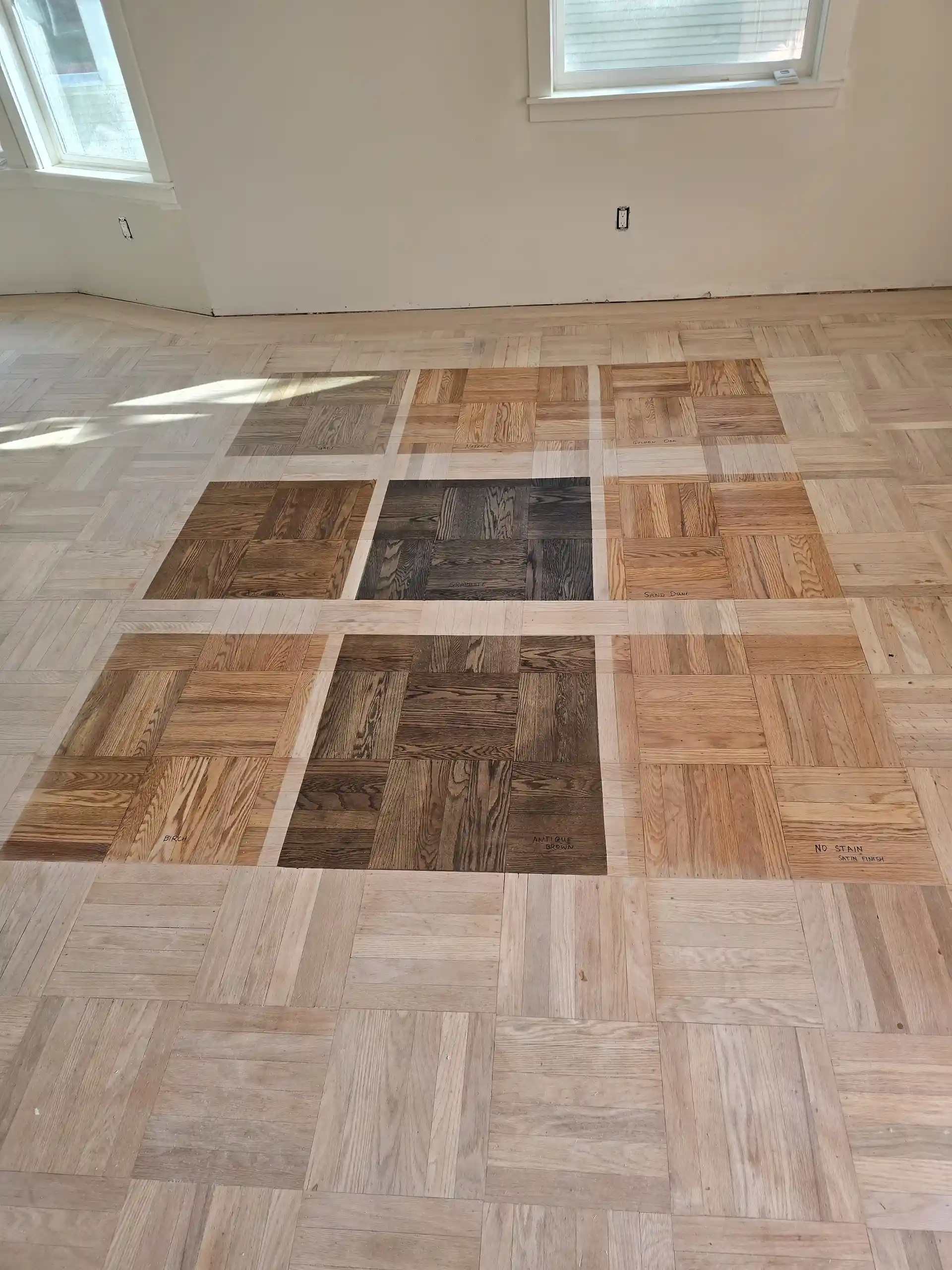
For Land Park oak, finish choices should respect the grain already present. Clear coats, tested stains, and suitable repair strips each play a role in making the old floor feel whole.
A natural finish can show warm and pale strips side by side. That range often feels more honest than forcing every board toward one shade. Our color samples help reveal which tones come from the wood itself. Beside existing trim, our samples make subtle differences easier to judge at home. Deep stain can shift the look, though grain still affects the final result. A sample across several strips gives a better picture than one small square.
A natural finish can show warm and pale strips side by side. That range often feels more honest than forcing every board toward one shade. Our color samples help reveal which tones come from the wood itself. Beside existing trim, our samples make subtle differences easier to judge at home. Deep stain can shift the look, though grain still affects the final result. A sample across several strips gives a better picture than one small square.
Sheen affects how light travels across an older floor with slight surface changes. A soft sheen can make reflections less sharp through a connected living area. A glossier coat brings more shine and may draw attention to small marks. We explain those tradeoffs alongside the care needs of the proposed finish system. Shoes, pets, and furniture all put wear on the top coat over time. The finish choice should fit those habits as well as the room's appearance.
Replacement oak needs a close review when damaged boards have to come out. A match involves strip width, grain direction, and available thickness at the joint. New wood can take stain differently even when its shape fits the opening. Our repair samples help set honest expectations about how a patch may read. Fill suits some small defects, while movement can make other gaps poor candidates. Our materials plan ties each product to a specific need in the floor.
We favor keeping sound original strips and sanding the worn face back to clean wood. A clear coat with low sheen lets the old grain stay central. For a darker look, stain trials should cross both old boards and new repair strips.
Land Park hardwood refinishing should preserve sound old oak while addressing worn finish.
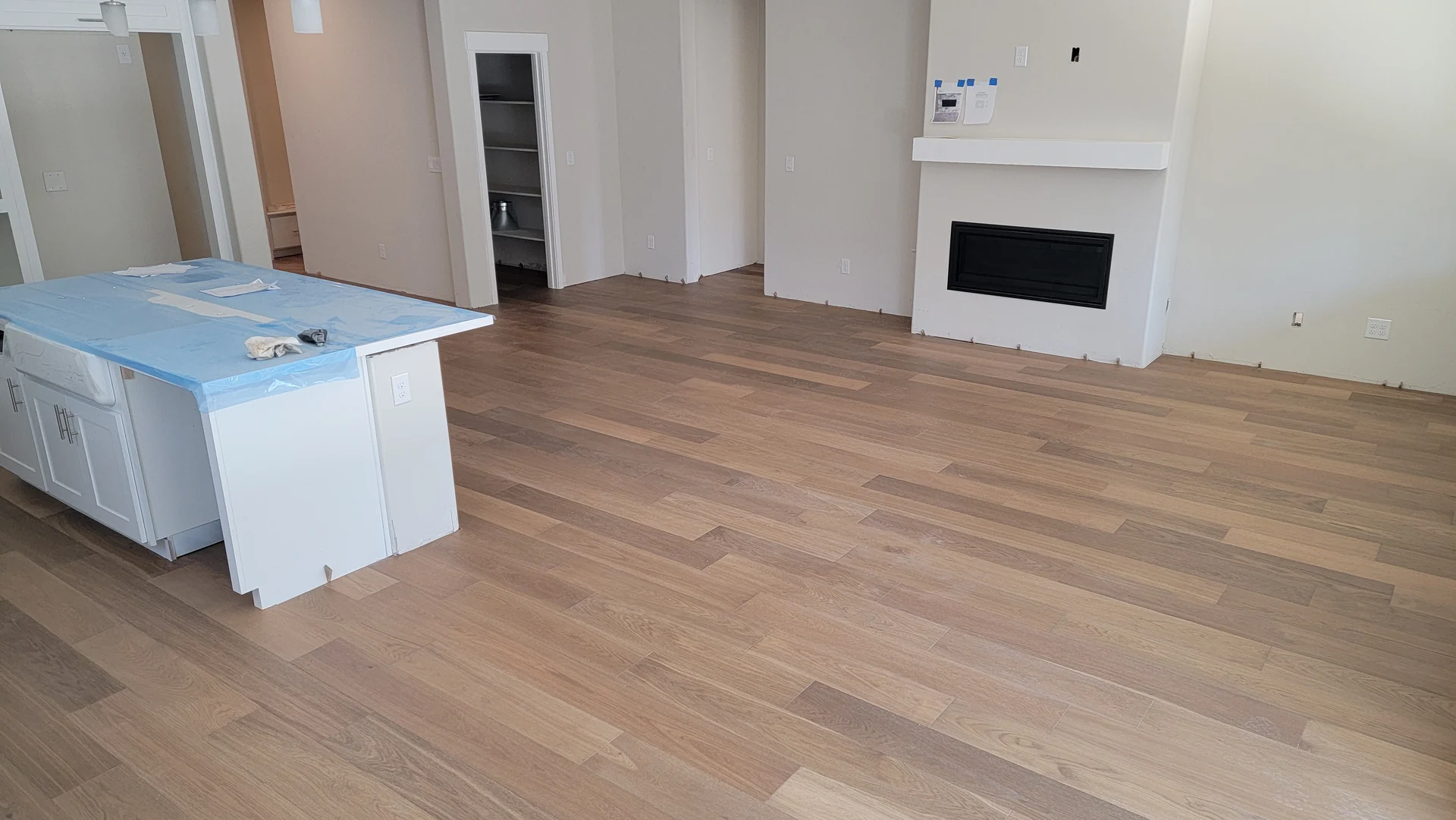
Land Park refinishing costs change with wood condition, sanding needs, and repair details. Carpet removal, stain trials, and stair work can add separate tasks, so we describe each part of the scope.
Room size counts, but area alone leaves many labor needs out of view. A hall with several closets has more edges than a simple square room. Old finish along walls can require careful work around nearby trim. The estimate we prepare relates those details to the measured spaces under review. Access can also affect how machines and supplies move into the work zone. Tight paths need planning before the first piece of furniture leaves its spot.
Room size counts, but area alone leaves many labor needs out of view. A hall with several closets has more edges than a simple square room. Old finish along walls can require careful work around nearby trim. The estimate we prepare relates those details to the measured spaces under review. Access can also affect how machines and supplies move into the work zone. Tight paths need planning before the first piece of furniture leaves its spot.
Damage under carpet can be uncertain until the whole surface is exposed. Dark spots may remain after sanding if their cause reached deep into the oak. Broken strips, missing pieces, and loose joints need their own repair decisions. Our written scope identifies visible repairs and explain how new findings get handled. That approach gives homeowners a clear point to approve changes before work expands. The quote also keeps the color decision separate from the cost of replacing wood.
The finish plan affects labor through samples, coat stages, and careful cleanup. A large color change may call for more testing on mixed old boards. Stair work uses smaller tools and adds detail around each exposed edge. Furniture handling and carpet disposal also belong in the quote when they apply. With our breakdown, the owner can see which choices change the total scope. Useful cost planning starts with the work itself rather than a vague area rate.
For this Land Park floor, our written quote separates board repairs from sanding and coat work, where old repairs meet the original strip floor. Our daily cleanup follows the old strip floors and their repair seams, keeping grit away from the next stage of work.
The refinishing schedule for a Land Park home follows repairs, sanding, coating, and cure. Our plan explains room closures and return stages, with time allowed for the selected finish to develop strength.
The first stage opens the floor and settles the repair choices. Covered boards may show stains or patches that the initial visit could only flag. Supplies for approved repairs need to suit the strips already in place. We sequence those repairs before the sanding stage so loose pieces get resolved early. Color trials also need a clear decision before coating can move through the rooms. That order reduces the chance of a finished area waiting on unfinished choices.
The first stage opens the floor and settles the repair choices. Covered boards may show stains or patches that the initial visit could only flag. Supplies for approved repairs need to suit the strips already in place. We sequence those repairs before the sanding stage so loose pieces get resolved early. Color trials also need a clear decision before coating can move through the rooms. That order reduces the chance of a finished area waiting on unfinished choices.
During sanding, the main concern is safe access around active work zones. A shared hall can close a route to rooms beyond the work area. Pets and daily household items need another place while tools are running. Our access discussion covers those practical needs before equipment comes into the house. After sanding, thorough cleanup prepares the surface for the first finishing step. Each following coat depends on the system's instructions and the room conditions that day.
Returning home involves more than noticing that the top coat feels dry. Finish strength develops over time, and different loads affect the surface differently. Light steps, chair legs, and rug backing each call for separate care guidance. We explain those stages at handoff so the new finish gets a gentle start. Rugs may return later than furniture, depending on the coating used. A written return plan helps keep a freshly renewed floor looking settled as rooms reopen.
The older homes around Hollywood Park and South Land Park are part of the local hardwood story. Where original boards remain, their depth and old repairs guide how much wood we can sand.
The area's older hardwood rewards repairs that keep sound strips in place. We compare patch grain and strip width before removing more boards than needed. A sample across old and repaired wood shows whether stain would help blend the join. Our survey records what is exposed and what remains covered during the visit. A careful reveal later can settle repair choices that were still open at estimate time. Homeowners then have a clearer basis for choosing between preservation and targeted replacement. In Curtis Park or Hollywood Park, matching old work can be central to the project. One room may have a patch that stands out beside the surrounding grain. A new coat may change the contrast but leave the seam quite visible. We explain that distinction before setting expectations for a continuous finished surface. Sound older repairs can stay when they fit the owner's goals and remain secure. Other patches may need new strips to achieve the agreed scope of work. South Land Park visits also start with room condition and household access. Neighborhood labels give little detail about what previous owners did to a floor. The work plan needs the actual wear, board thickness, and finish history. Our crew documents those points while discussing how the house will function during work. The same care extends to closets and short halls beyond the main room. Good local service means a practical plan for that particular home and its oak.
The area's older hardwood rewards repairs that keep sound strips in place. We compare patch grain and strip width before removing more boards than needed. A sample across old and repaired wood shows whether stain would help blend the join. Our survey records what is exposed and what remains covered during the visit. A careful reveal later can settle repair choices that were still open at estimate time. Homeowners then have a clearer basis for choosing between preservation and targeted replacement. In Curtis Park or Hollywood Park, matching old work can be central to the project. One room may have a patch that stands out beside the surrounding grain. A new coat may change the contrast but leave the seam quite visible. We explain that distinction before setting expectations for a continuous finished surface. Sound older repairs can stay when they fit the owner's goals and remain secure. Other patches may need new strips to achieve the agreed scope of work. South Land Park visits also start with room condition and household access. Neighborhood labels give little detail about what previous owners did to a floor. The work plan needs the actual wear, board thickness, and finish history. Our crew documents those points while discussing how the house will function during work. The same care extends to closets and short halls beyond the main room. Good local service means a practical plan for that particular home and its oak.
Land Park Project Questions
The answer rests on board thickness, sound joints, and the depth of damage. Our review aims to preserve usable strips and replace only what the agreed repair scope requires.
A fresh finish can soften differences, but wood grain and age may remain visible. Trial color across a patch helps show what the final contrast may be.
Clear finishing can suit oak with a natural tone the owner enjoys. Stain is a color choice that we test after reviewing the wood condition.
A shared hall may close while sanding or coating is underway. The room plan identifies routes and temporary closures before work begins.
Related Flooring